Lesson 15

The lesson aims to introduce students to basic concepts related to migration: internally displaced person, migrant, emigrant, and refugee. Students explore the topic of human movement, the nature of identity, and the sense of home. Special emphasis is placed on developing empathy, active listening, questioning, and reflecting on one’s own experiences. The lesson combines elements of reflection, philosophical thinking, and creative freedom, fostering critical and imaginative thinking as well as respect for the experiences of others.

What feels especially valuable to me is that the materials are deeply rooted in the Ukrainian context — symbols, images familiar to children, and very real life examples. I used it in my lessons, and it truly works so well.
A personal wow moment for me is the possibility to interpret the same concepts in different ways depending on the age group. Honestly, I have never come across an approach like this before.
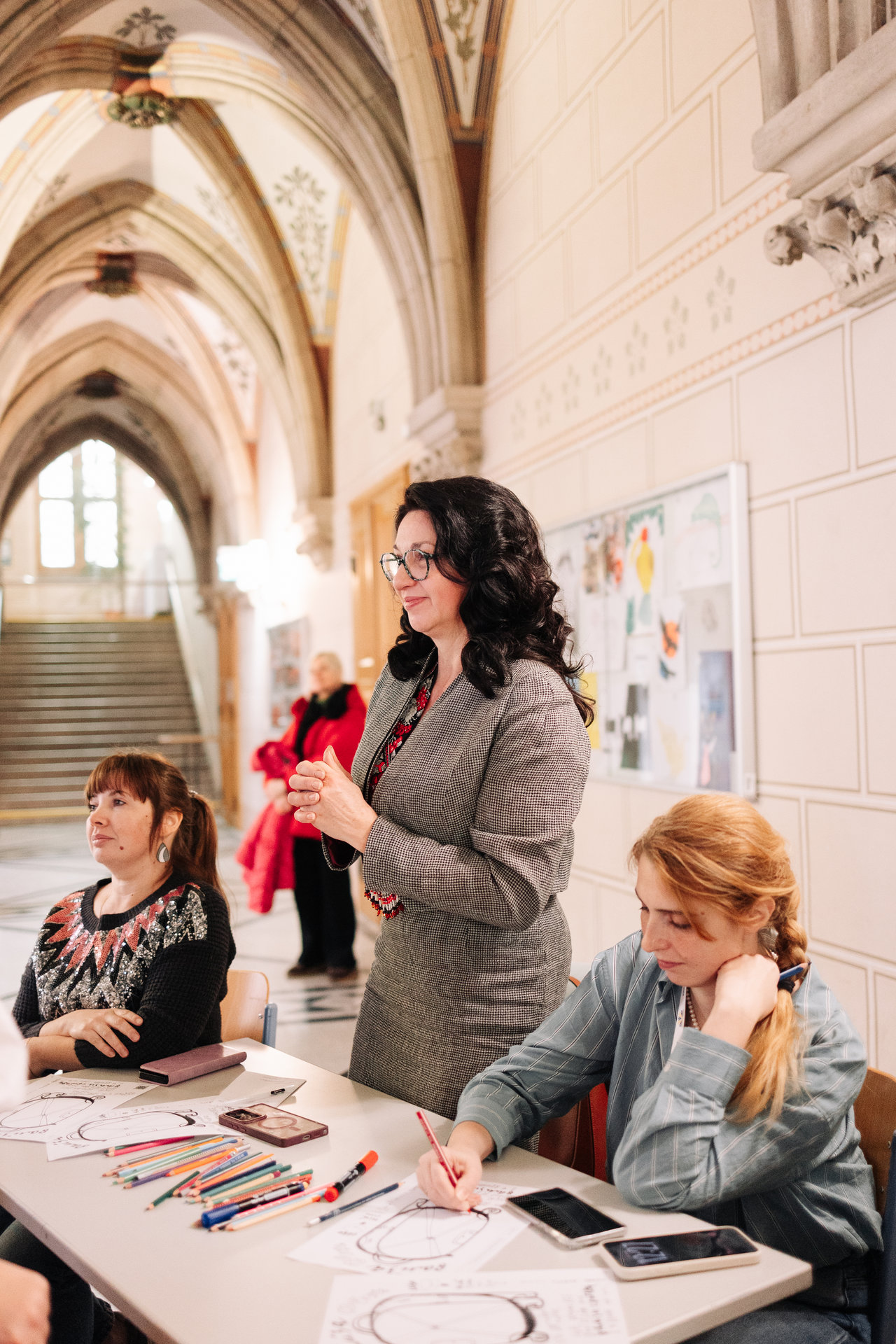
“Hello everyone 🙂
The thing is, for the past two years, my students and I have been exploring together how to find the way back to ourselves — #happyineverymoment. But with the graphic workbook, this journey becomes 100% easier.
Not all children knew what should be inside an emergency suitcase, and as we can see, this knowledge is useful for everyone. We also explored the meaning of the word “freedom” — and honestly, this is something that remains fascinating even for adults. The lesson was engaging for every participant because there was complete freedom of expression.
We keep moving forward :)”
Hello! This Saturday, we also travelled through the pages of the graphic workbook. The children truly enjoyed it: they were able to open up, share their dreams and hopes, fly on imaginary clouds, and cross mountain obstacles together through their imagination. Almost every child naturally returned to the themes of Ukraine, home, war, and victory.